Lockout/Tagout Program Requirements in Quebec: Build a Compliant LOTO System
By the Système Préventis OHS Team | LOTO | Machine Safety
Every year, the Commission des normes, de l'équité, de la santé et de la sécurité du travail (CNESST) records an average of four deaths and 1,000 workplace accidents in Quebec directly linked to failures in lockout/tagout (LOTO) procedures during maintenance, repair, and servicing tasks. These are not freak events — they are predictable outcomes of missing, incomplete, or improperly applied hazardous energy control programs. Equipment that is not locked out can re-energize without warning, exposing maintenance workers to crushing, electrical, thermal, pneumatic, and chemical hazards in seconds.
Quebec's Regulation respecting occupational health and safety (RSST), updated in July 2023, sets out detailed lockout/tagout program requirements in sections 195 to 207. These requirements — aligned with the national standard CSA Z460, Control of Hazardous Energy — apply to every employer whose workers perform any non-production work in the danger zone of a machine. This article explains what those requirements are, what your LOTO programme must include, and what separates a truly compliant programme from a paper-only policy.
What Are the Lockout/Tagout Program Requirements in Quebec?
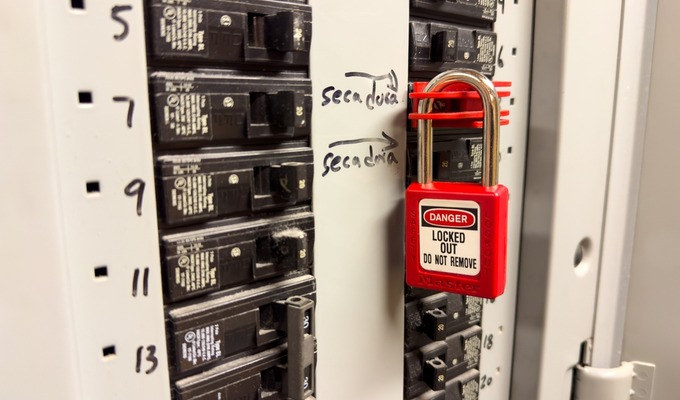
Quebec's RSST defines lockout as an energy control method designed to install an individually keyed lock on an energy isolating device, or on any other device allowing for the control of energy, such as a lockout box. The core legal requirement is straightforward: before any worker enters the danger zone of a machine to perform maintenance, repair, adjustment, inspection, cleaning, or any other non-production task, lockout or an equivalent method must be applied.
Under RSST section 196, lockout is the primary and preferred method in Quebec. Where lockout is not technically applicable, the employer must conduct a documented risk analysis to demonstrate that an alternative method provides equivalent safety. The use of an alternative method for productivity reasons is expressly prohibited. This requirement mirrors the approach in CSA Z460, which also prioritizes lockout and imposes a documented justification requirement for any deviation.
Which Workers and Which Machines Are Covered?
RSST section 195 applies to all work performed in the danger zone of a machine that is not part of normal production operations. The scope is deliberately broad: it covers assembly, installation, adjustment, inspection, unjamming, setting, decommissioning, maintenance, disassembly, cleaning, overhaul, repair, modification, and unblocking. Mobile equipment — vehicles, forklifts, municipal machinery — is explicitly included under sections 195 to 207 and requires the same written lockout procedures as fixed industrial equipment.
ℹ Definition: Lockout (RSST s. 195)
An energy control method designed to install an individually keyed lock on an energy isolating device or on any other energy control device (such as a lockout box) to ensure that all energy sources are maintained in a safe state for the entire duration of work.
Key principle: If more than one person is working in the danger zone of a machine, each person must install their own personal lock. No shared locks. No master keys used in substitution for personal locks (except in limited circumstances prescribed by regulation for fixed industrial equipment).
Types of hazardous energy covered: electrical, mechanical, hydraulic, pneumatic, chemical, thermal, and gravitational (stored energy from elevated parts or spring-loaded mechanisms).
What Must a Quebec Lockout/Tagout Program Include?
A compliant LOTO programme in Quebec is more than a set of lockout cards. It is a structured system that encompasses written procedures, training, equipment, authorization controls, and documentation. The following elements are required under RSST sections 195 to 207 and the CSA Z460 standard.
1. Written Lockout Procedures for Each Machine
RSST section 200 requires that a written lockout procedure be developed and applied for each machine that requires lockout. These procedures must be:
- Easily accessible at the worksite where the work is carried out
- Written in a language and format that is intelligible to every person who has access to the danger zone
- Specific to the machine — generic procedures that apply to "all equipment" do not satisfy the requirement
- Kept current — procedures must be revised whenever the machine is modified or the energy control method changes
2. Required Content of Each Lockout Procedure
Under RSST section 200, each written lockout procedure must include the following specific elements:
- The sequence for shutting down and completely stopping the machine
- The steps for eliminating or, where elimination is impossible, controlling all residual or stored energy (including bleeding pneumatic lines, blocking elevated components, discharging capacitors, and releasing spring tension)
- The identity and location of every energy-isolating device for the machine
- The type and quantity of lockout hardware required
- The verification step confirming that the machine is in a zero-energy state before work begins
- The procedure for re-energizing the machine safely once work is complete
3. Energy Isolation Verification — Zero-Energy State
The zero-energy state verification is a mandatory step that is frequently skipped or done incorrectly in practice. After all locks have been applied, the worker must attempt to start the machine to confirm it cannot be activated. For hydraulic or pneumatic systems, residual pressure must be bled before work begins. For electrical systems, voltage testing is required. RSST section 202 makes this verification step explicit, and it must be performed before any worker enters the danger zone.
4. Training and Information Requirements
RSST section 202 requires employers to ensure that every person who has access to the danger zone of a machine is trained and informed on: the hazards associated with the work performed on the machine, the energy control method applied, and the specific lockout procedure for each machine. Training must cover both authorized workers (those who apply the locks) and affected workers (those who work near locked-out equipment and must recognize when LOTO is in effect). Training records must be maintained and available for CNESST inspection.
5. Written Work Authorization
Before any worker enters the danger zone of a machine under a LOTO procedure, written authorization from the employer or a person designated by the employer is required under RSST section 201. This authorization must be specific to the work being performed and must be issued in advance. Verbal authorizations do not satisfy this requirement. Multi-employer worksites have additional coordination obligations, with the principal employer (maître d'œuvre) responsible for ensuring lockout coordination across all contractors.
6. Personal Lock Requirements
Every worker who enters the danger zone must apply their own personal, individually keyed lock. The worker's name must be clearly indicated on the lock or in a lockout register. Under RSST section 204, if a worker's lock must be removed in their absence, a specific prescribed procedure must be followed — including inspection of the danger zone and, where possible, obtaining the lock holder's authorization. The cutting of a personal lock without following this procedure is a regulatory violation.
⚠ The July 2023 RSST Update: What Changed for LOTO
On July 27, 2023, amendments to Section XXI (Machines) of the RSST came into force. The article numbers for lockout requirements changed: what were sections 188.1–188.13 are now sections 195–207. The content of the lockout obligations was not changed — only renumbered and reorganized for consistency with Canadian and international machine safety standards.
The 2023 update also clarified roles and responsibilities for machine designers, manufacturers, and integrators — with new obligations to provide lockout-compatible isolating devices and updated manuals.
Any lockout programme, procedure, or training material that still references "sections 188.1 to 188.13" should be updated to reflect the current numbering (sections 195–207).
Lockout/Tagout Program Requirements: What CSA Z460 Adds
While the RSST establishes the minimum legal requirements for lockout in Quebec, the national standard CSA Z460, Control of Hazardous Energy — Lockout and Other Methods, provides the comprehensive framework that best-practice LOTO programmes are built on. Quebec's RSST lockout provisions are directly inspired by CSA Z460, and CNESST guidance regularly references it as the implementation standard.
CSA Z460 adds value in several areas the RSST addresses only broadly. It provides detailed guidance on hazardous energy program scope and structure, machine-specific risk assessment methodology, group lockout procedures for multi-person maintenance tasks, contractor lockout coordination on multi-employer sites, and annual program audit requirements. For employers building a new LOTO programme or auditing an existing one, CSA Z460 is the most practical implementation tool available.
Is CSA Z460 Legally Mandatory in Quebec?
CSA Z460 is a voluntary standard — it does not have the force of law on its own. However, because Quebec's RSST lockout provisions are modelled on its requirements, a programme that fully satisfies CSA Z460 will generally satisfy the RSST. More importantly, CNESST inspectors use CSA Z460 as a benchmark when evaluating lockout programme quality. An employer who cannot demonstrate a programme that meets CSA Z460 principles faces a significantly weaker due diligence defence in the event of a lockout-related incident or fatality.
Common Lockout/Tagout Program Gaps That Lead to CNESST Findings
Most lockout-related CNESST inspection findings fall into a predictable set of categories. Understanding them is the fastest way to assess whether your existing programme has compliance gaps.
- Generic or missing machine-specific procedures: A single "lockout procedure" posted on the wall does not satisfy RSST section 200. Each machine requires its own procedure, including its specific energy isolating devices, lock locations, and residual energy steps.
- No written work authorization system: Verbal approvals and informal "just go ahead" practices violate section 201. A documented authorization process is required before any danger zone entry.
- Zero-energy verification step missing: Workers applying locks and then immediately starting work without attempting to start the machine skip the mandatory verification required under section 202. This is among the most dangerous gaps.
- Untrained workers: Training records that are missing, outdated, or that cover only lockout theory without machine-specific instruction do not satisfy section 202. Affected workers who work near locked equipment must also be trained, not only authorized workers.
- Mobile equipment excluded: Many programmes cover only fixed industrial equipment and omit forklifts, municipal vehicles, and other mobile machinery. Sections 195 to 207 apply equally to all machines, fixed or mobile.
- Procedures not updated after machine changes: A procedure written in 2018 that does not reflect a 2022 machine retrofit is non-compliant. Procedures must be current and revised when machines change.
How Système Préventis Supports Your Lockout/Tagout Program Requirements
A fully compliant LOTO programme requires more than a binder of laminated cards. It is a living system that must manage written procedures for every machine, track work authorizations, document training completions, maintain lock registers, and generate audit-ready records for CNESST inspections. Système Préventis delivers a dedicated LOTO module within its integrated occupational health and safety platform, purpose-built to operationalize each element of the RSST and CSA Z460 requirements.
Lockout/Tagout Module: Procedure Management
The Système Préventis LOTO module stores machine-specific lockout procedures in a centralized, searchable library accessible to authorized workers at the point of work. Procedures are linked to individual equipment records, include all required content fields under RSST section 200, and flag procedures that are due for review whenever a machine record is updated. Workers and supervisors access current procedures directly from the platform, eliminating the risk of outdated paper cards in use on the shop floor.
Work Authorization Tracking
The platform's work authorization workflow digitizes the written authorization requirement of RSST section 201. Supervisors issue authorizations within the system, tied to specific machines and specific work orders. Each authorization is time-stamped and retained as a permanent record. This replaces informal verbal approvals with a documented, auditable process that satisfies both the RSST requirement and CNESST inspection expectations.
Training Management and Competency Records
The Système Préventis training management module schedules, delivers, and records LOTO training for both authorized and affected workers. Training is linked to specific machines and energy types, ensuring that competency records reflect the machine-specific instruction required under RSST section 202. The system tracks training expiry and generates alerts when retraining is due, so compliance is maintained continuously rather than managed reactively before audits.
Programme Audit and Continuous Improvement
The platform generates the documentation trail required to demonstrate an active, well-managed LOTO programme to CNESST inspectors. This includes procedure version histories, authorization logs, training completion records, and corrective action records linked to any incident or near-miss involving hazardous energy. This structured documentation directly supports the employer's due diligence defence under the LSST (Loi sur la santé et la sécurité du travail) in the event of any enforcement action.
Lockout/tagout failures remain one of the leading causes of fatal workplace accidents in Quebec, and the CNESST's enforcement activity in this area is ongoing. Under RSST sections 195 to 207 — updated in July 2023 and aligned with CSA Z460 — every Quebec employer whose workers enter machine danger zones must maintain written, machine-specific lockout procedures, a documented work authorization system, a zero-energy verification process, and current training records for all authorized and affected workers. Système Préventis's LOTO module brings all of these elements into a single, integrated platform, so that due diligence is embedded in daily operations and documented automatically — not reconstructed after an incident.
Frequently Asked Questions
What are the lockout/tagout program requirements in Quebec?
Quebec's RSST sections 195 to 207 require employers to apply lockout or an equivalent method before any worker enters the danger zone of a machine for non-production work. Employers must develop written, machine-specific lockout procedures, issue written work authorizations, train all authorized and affected workers, provide personal locks, verify the zero-energy state before entry, and maintain records. The national standard CSA Z460 provides the implementation framework that complements these regulatory requirements.
Does every machine need its own lockout procedure in Quebec?
Yes. RSST section 200 requires a written lockout procedure for each machine that requires lockout. Generic procedures that apply to all equipment do not satisfy this requirement. Each procedure must identify the specific energy isolating devices, the lock locations, the steps for eliminating residual energy, and the zero-energy verification method for that particular machine. Mobile equipment is also covered and requires its own machine-specific procedures.
What records must employers keep for lockout/tagout procedures in Quebec?
Employers must maintain records of written lockout procedures for each machine, work authorization records for each danger zone entry, and training completion records showing that all authorized and affected workers have been trained on the specific machines and energy types they work with. These records must be available for CNESST inspection at any time. Procedure version histories should also be retained to demonstrate that procedures are kept current after machine modifications.
What is the difference between an authorized worker and an affected worker for LOTO training?
An authorized worker is one who applies personal locks and performs work in the danger zone of a machine. An affected worker is one who works in the area where lockout is applied but does not perform the maintenance task. Under RSST section 202, both categories must be trained: authorized workers on the machine-specific lockout procedure and all energy types involved, and affected workers on recognizing when lockout is in effect and understanding their responsibilities when a machine is locked out.
Is CSA Z460 mandatory in Quebec?
CSA Z460 is a voluntary national standard — it does not carry the direct force of law. However, Quebec's RSST lockout provisions are modelled on its requirements, and CNESST inspectors use it as the benchmark when evaluating lockout programme quality. An employer who has built their programme to satisfy CSA Z460 will generally satisfy the RSST as well. Failing to meet CSA Z460 standards while claiming RSST compliance is a weak position in any enforcement proceeding or incident investigation.
Sources
- CNESST — Exposure to the Hazardous Areas of a Machine (Lockout)
- Règlement sur la santé et la sécurité du travail (RSST), sections 195–207 — Publications du Québec
- Loi sur la santé et la sécurité du travail (LSST) — Publications du Québec
- CSA Z460, Control of Hazardous Energy — Lockout and Other Methods — CSA Group
- APSAM — Modifications réglementaires : sécurité des machines (July 2023 RSST Update)
- CNESST — Cadenassage et autres méthodes de contrôle des énergies — Guide d'information sur les dispositions réglementaires (2023)
- CCOHS — Lockout: Legislation by Canadian Jurisdiction
- IRSST — Sécurité des machines — Démarche de contrôle des énergies dangereuses (Guide RG-1034)
Système Préventis | A QuadShift Company | May 2026

Heading
Lorem ipsum dolor sit amet, consectetur adipiscing elit. Suspendisse varius enim in eros elementum tristique.